Astronomers are filling in the blanks of the Kuiper Belt
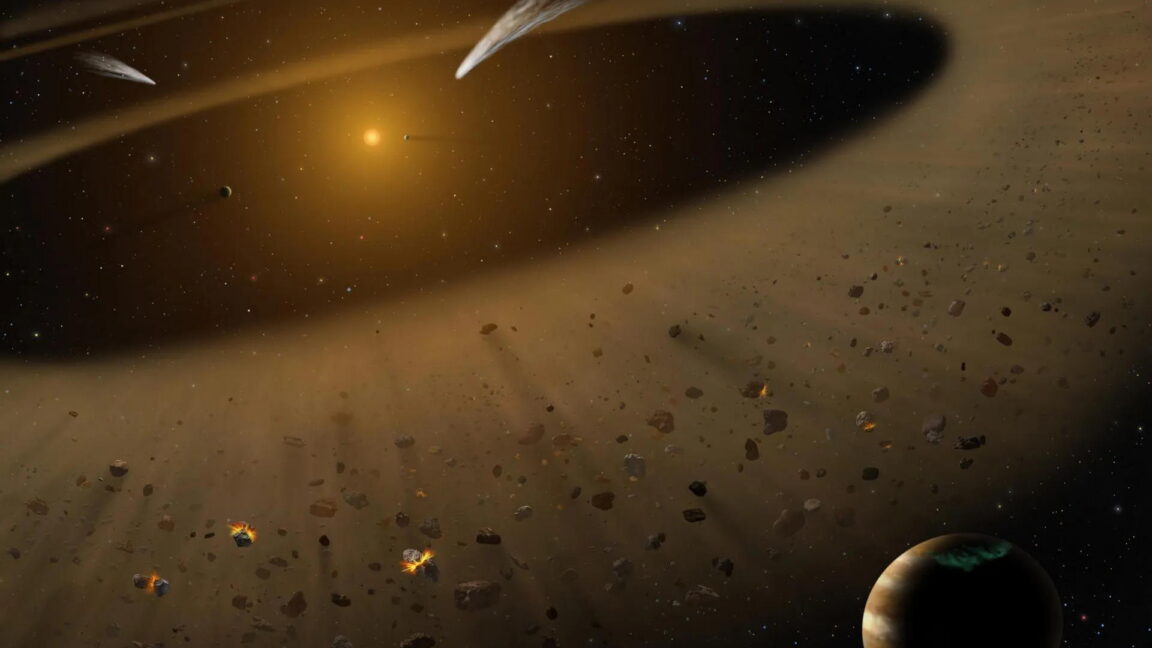
Astronomers are making significant progress in mapping the Kuiper Belt, a vast region beyond the orbit of Neptune. This remote area of the solar system is home to numerous dwarf planets, icy bodies, and other small objects that offer insights into the early formation and evolution of our solar system. The use of next-generation telescopes, such as the James Webb Space Telescope and the Extremely Large Telescope, has enabled astronomers to fill in many of the blanks in our understanding of the Kuiper Belt. These powerful instruments have allowed researchers to observe and characterize these distant objects in greater detail, providing new information about their composition, orbits, and interactions. The study of the Kuiper Belt is crucial for understanding the processes that shaped the solar system, as well as the potential for life-bearing planets in other star systems. Continued exploration of this outer frontier will undoubtedly lead to more exciting discoveries and a deeper understanding of our cosmic neighborhood.
Source: For the complete article, please visit the original source link below.


