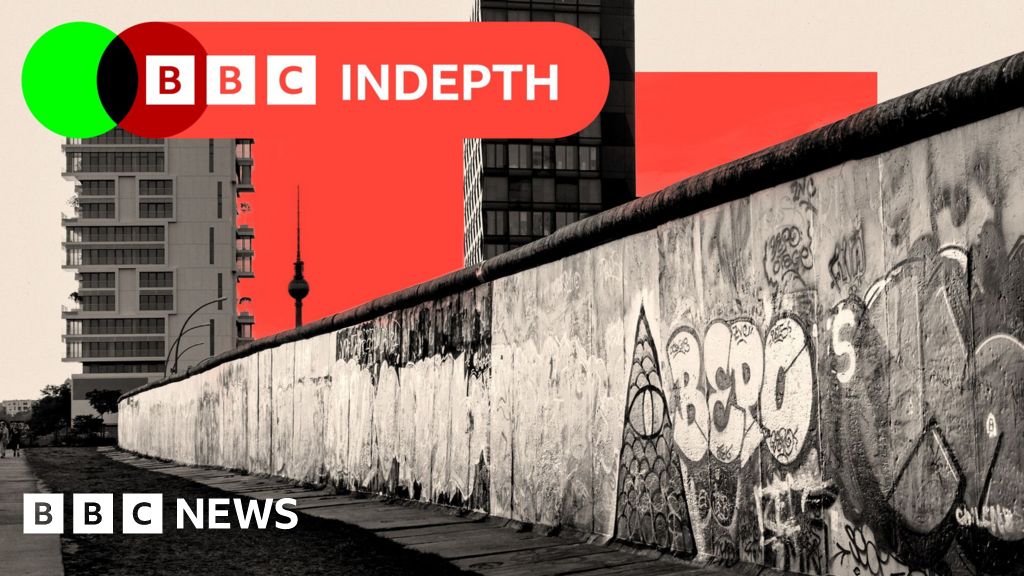
Germany may be reunited, but its divisions are still apparent
Jan-Niklas Hustedt remembers going to techno parties in the abandoned canteen of a pump factory that had drastically downsized after reunification, in his hometown of Oschersleben. He was born in East Germany in 1989, just a few weeks before the fall of the Berlin Wall. He describes himself as a "wendekind"; a child of the turning point. Now, at 36, he recalls how that time would change his community. Many businesses in the communist east struggled or simply collapsed as they were thrust into a profit-driven, highly competitive, global economy. "You hear all the stories," says Jan-Niklas. "Lots of people left because the opportunities were in the west." In the 35 years after reunification, the country's overall population grew by 3.8 million, a 5% increase - driven by immigration. But in the five states that were part of the eastern German Democratic Republic (GDR), the population has fallen by 16% (this figure excludes East Berlin). The state of Saxony-Anhalt, where Oschersleben lies, recorded the most dramatic decline at 26% - according to official statistics published last year. Now, across large swathes of the more rural east, further population falls are expected as the east's
Source: For the complete article, please visit the original source link below.