How Does Quadrophonic Vinyl Put Four Channels in One Groove? Look Through an Electron Microscope and See
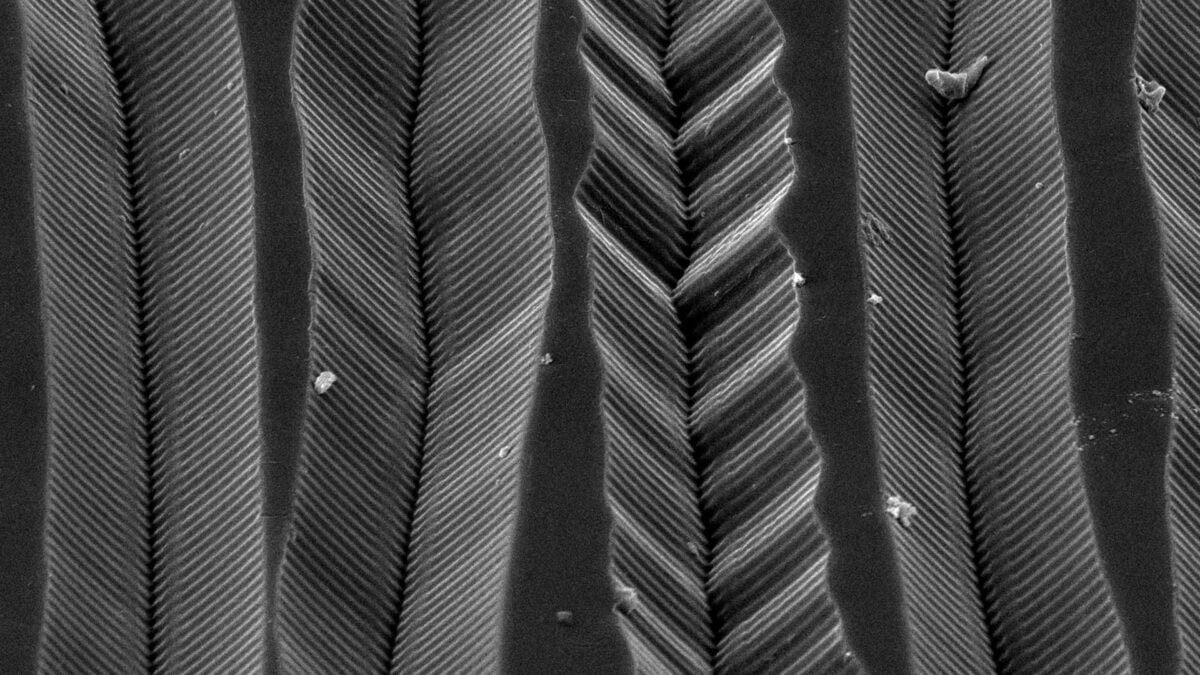
Quadraphonic sound was perhaps the first serious attempt to bring surround sound to home audio systems. The format was introduced in the 1970s and worked by adding two extra sound channels to the left and right channels of a stereo signal. These extra channels were referred to as “rear channels”, and the idea was that they would run to speakers placed behind a listener, creating an immersive encounter that would simulate the experience of being in a concert hall. Unfortunately, the concept never really caught on, not least because both quadraphonic systems and quadraphonic recording equipment were expensive—and the former wasn’t much use if no one was making quadraphonic records, while the latter wasn’t much use if no one was buying such records. If you think about it, though, the format does raise one interesting question. During the 1970s, the vinyl record was far and away the most popular audio format. So how do you fit four audio channels into one vinyl groove? A YouTuber who goes by the rather utilitarian name of “Microscopy Specialist” has the answer. Mr. Specialist’s bio explains that his name is Eric and he is, yes, a specialist in microscopy, which explains why he has a fr
Source: For the complete article, please visit the original source link below.