Scientists Used Medieval Poems and Trees to Uncover a 13th-Century Solar Surge
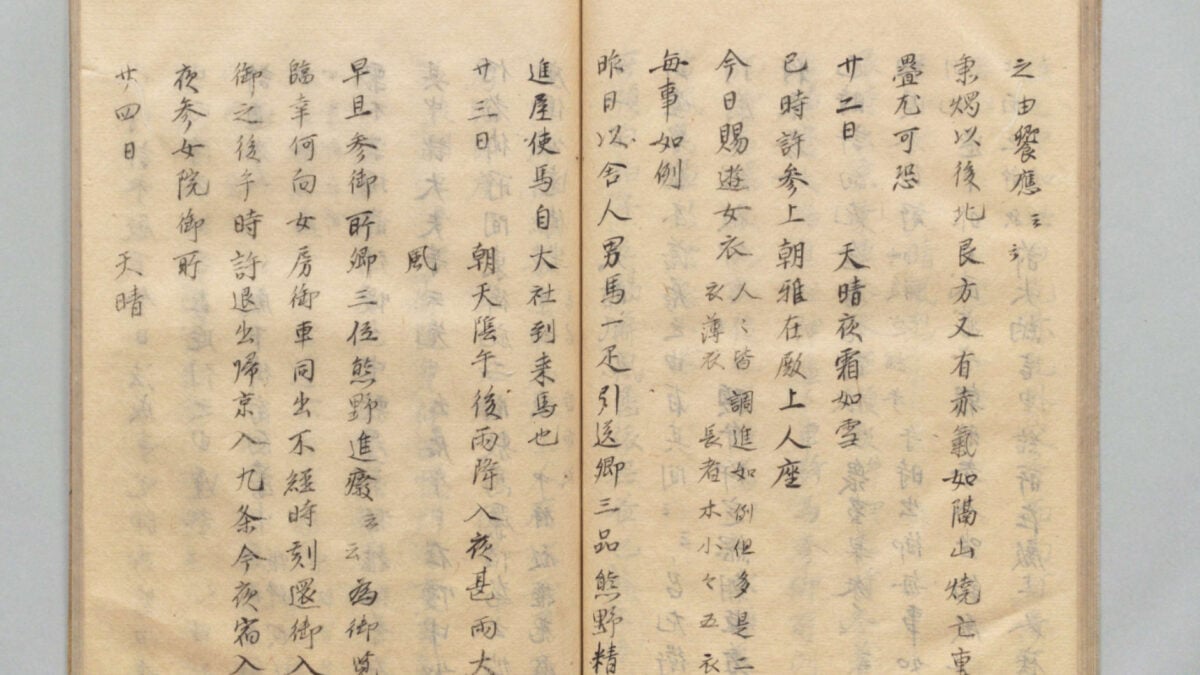
For obvious reasons, tracking space weather events from long ago is extremely difficult—unless we’re talking about extremely powerful, out-of-the-ordinary occurrences. But for understanding broader weather patterns, these rarities aren’t the most ideal markers. So, scientists tried turning to an unexpected source for help: poetry. In the winter of 1204, Fujiwara no Teika, a renowned Japanese poet, wrote about “red lights in the northern sky over Kyoto” over three nights. Researchers at the Okinawa Institute of Science and Technology (OIST) in Japan decided to perform ultra-precise carbon dating of buried trees from that period. Their analysis, published today in the Proceedings of the Japan Academy, Series B, revealed a peak in solar activity between 1200 and 1205 CE, demonstrating the potential of historical literature in the study of space weather patterns from long ago. “The high-precision data not only allowed us to accurately date sub-extreme solar proton events, but it also let us clearly reconstruct the solar cycles of the period,” Hiroko Miyahara, the study’s lead author and a physicist at OIST, said in a statement. Technically speaking, existing tools are quite capable of
Source: For the complete article, please visit the original source link below.