Lewis stranding offers clues to pilot whales' deep water lives
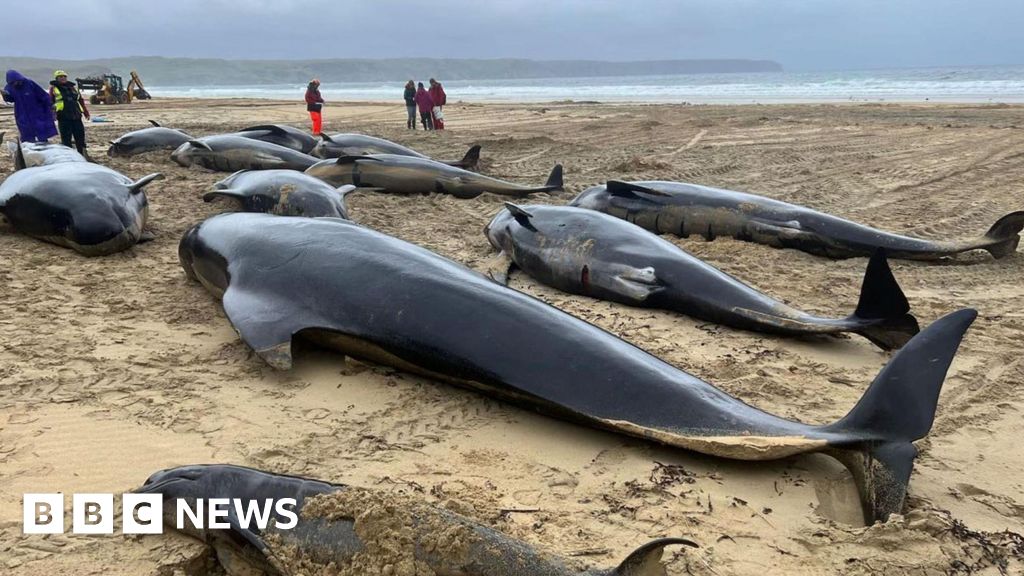
Scientists say they have discovered rare insights into the feeding habits of long-finned pilot whales after a mass stranding in the Western Isles. The pod of 55 whales died after getting into difficulty in Tolsta Bay, Lewis, in July 2023. Research published last month suggested the stranding was triggered by a female experiencing a difficult birth. Scientists said the new study had found evidence about their seasonal feeding grounds and how they place the elusive animals at risk of stranding. The study, led by the Scottish Marine Animal Stranding Scheme (SMASS) based at the University of Glasgow, has been published in the scientific journal PLOS One. By analysing skin tissue, scientists have identified "chemical signatures" that show the whales were healthy and had likely hunted fish and squid near deep waters of the continental shelf, an area of seabed that surrounds the UK. The researchers said long-finned pilot whales were a deep water species and "notoriously difficult" to study in the wild. It was possible to take tissue samples from stranded animals, and stable isotope analysis was used to reconstruct their feeding history. The data indicated that the pod had been feeding pri
Source: For the complete article, please visit the original source link below.