The world's largest mammal migration that few travellers ever see
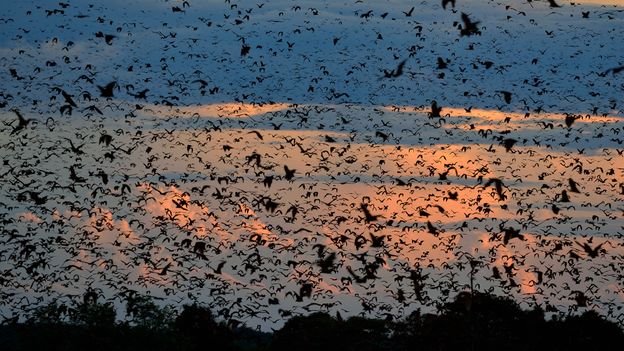
Every year, millions of straw-coloured fruit bats descend on Zambia's little-known Kasanka National Park, creating one of Africa's most extraordinary wildlife spectacles. There's a storm on the horizon. Lightning flickers, illuminating the Central Zambezian miombo woodlands with brief flashes of silver. The sun is setting, the air smells of damp earth and somewhere ahead of us, millions of bats are waking up. We park our vehicle in front of the Musola Hide, Kasanka National Park's prime bat observation point. The 10m (33ft) climb up to the wooden platform feels precarious, the ladder swaying slightly beneath my feet. Across the canopy, the sky glows orange and purple behind the distant thunderclouds. The forest beneath us begins to tremble. Legions of straw-coloured fruit bats (Eidolon helvum) hang in the trees, packed together so tightly some seem to cling to one another rather than to the actual branches, which sag under their collective weight. The air fills with chatter, whistles and shrieks. And then the bats begin to fly. At first, it's only a few, then, one by one, others take flight. Soon, the sky is a vortex of movement. Bats stream out of the forest in every direction, sw
Source: For the complete article, please visit the original source link below.