← All storiesScienceDeveloping story

Webb telescope gets unprecedented look at dead star's surviving planet

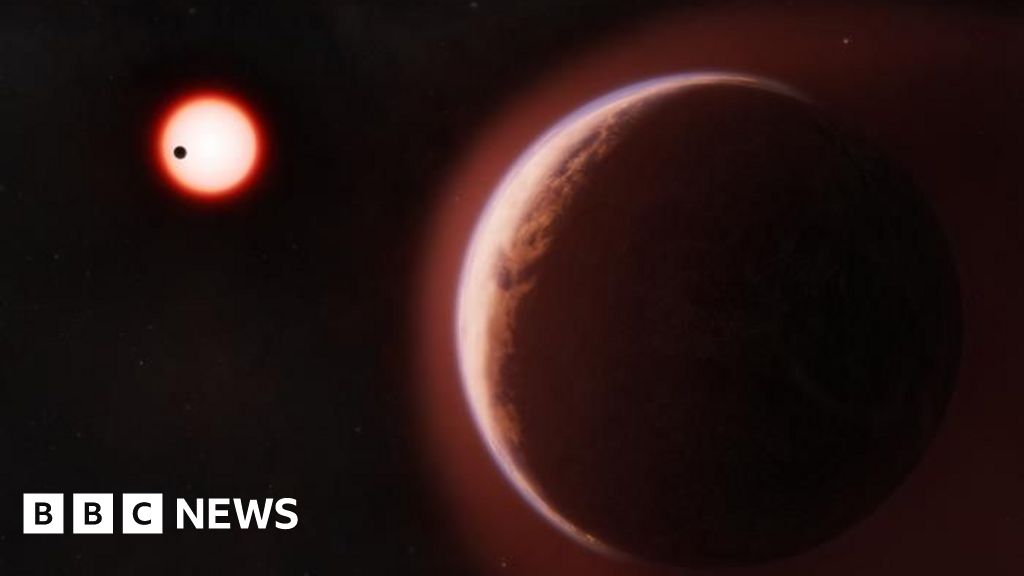
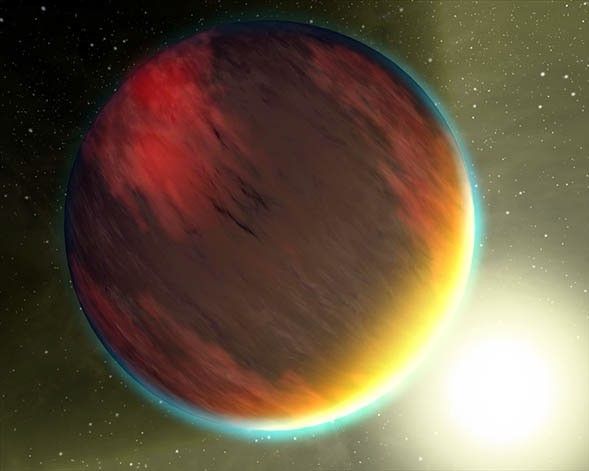
A giant planet somehow heated back up billions of years after its star died, giving astronomers insight into the wildly unexpected afterlife of solar systems. Using NASA's James Webb Space Telescope, researchers recorded the first detailed atmosphere measurements of a planet orbiting a white dwarf, the husk of a sun-like star that has long since fizzled out. The exoplanet, WD 1856 b, is about 80 light-years away from Earth in space. These findings, published on Wednesday in Nature, could reveal a possible fate for our own planetary neighborhood. Though Earth and other close planets are unlikely to survive the sun's bloated red giant phase, which comes before a medium-size star withers into a white dwarf, the new study suggests at least some of the outermost planets could — and even reshuffle their orbits, setting the stage for a second act long afterward. "We're used to looking back in time when we use telescopes, but this is the first time we have been able to look forward to what might happen," said Ryan J. MacDonald, an astronomy lecturer at the University of St. Andrews in Scotland, in a statement. "It's like using a time machine to peer into the distant future of our solar sys

4
updates in timeline
3
distinct sources
2 weeks
story span
Jul 18, 2026
latest update

Jul 1, 2026 → Jul 18, 2026

LATEST DEVELOPMENT
Jul 18, 2026·MashableT2 · Outlet report
Moon phase today explained: What the Moon will look like on July 18, 2026

After days of almost complete darkness, the Moon is finally illuminated enough to spot some features on its surface once again. What can you see when you look up tonight? As of Saturday, July 18, NASA's Daily Moon Guide tracker tells us…

Read original at Mashable →
ACTIVITY · UPDATES PER MONTH
Jul 26

4 updates from 3 sources over 2 weeks.

Showing 4 of 4 updates

Timeline (4 updates)

July 2026

4 updates
Jul 18, 2026·MashableT2 · Outlet reportLATEST
Moon phase today explained: What the Moon will look like on July 18, 2026

After days of almost complete darkness, the Moon is finally illuminated enough to spot some features on its surface once again. What can you see when you look up tonight? As of Saturday, July 18, NASA's Daily Moon Guide…

Read original at Mashable →
Jul 15, 2026·CNETT2 · Outlet reportKEY MOMENT
Study Suggests We've Been Measuring Solar Storms All Wrong - CNET

Our gifting experts are obsessively searching for holiday gifts that are unique, thoughtful and suitable for any budget. Our expert, award-winning staff selects the products we cover and rigorously researches and tests…

Read original at CNET →
Jul 8, 2026·GizmodoT2 · Outlet reportKEY MOMENT
NASA's Pluto Probe Is Finally Approaching a Major Boundary of Deep Space

In late June, NASA’s New Horizons spacecraft woke up from a nearly year-long slumber at a distance of approximately 5.9 billion miles (9.5 billion kilometers) from Earth. As it continues its mission deep in the Kuiper…

Read original at Gizmodo →
Jul 1, 2026·MashableT2 · Outlet reportOPENING
Webb telescope gets unprecedented look at dead star's surviving planet

A giant planet somehow heated back up billions of years after its star died, giving astronomers insight into the wildly unexpected afterlife of solar systems. Using NASA's James Webb Space Telescope, researchers…

Read original at Mashable →

Sources & evidence (4)

What this story stands on. Tier 0 is a primary record or the subject's own words; higher tiers must be attributed, never stated as bare fact.

T2 · Outlet report× 4
COVERAGE BY SOURCE
Mashable 2Gizmodo 1CNET 1
STRONGEST EVIDENCE
T2 · Outlet reportMashableJul 18, 2026

After days of almost complete darkness, the Moon is finally illuminated enough to spot some features on its surface once again. What can you see when you look up tonight? As of Saturday, July 18, NASA's Daily Moon Guide tracker tells us…

View source →
T2 · Outlet reportCNETJul 15, 2026

Our gifting experts are obsessively searching for holiday gifts that are unique, thoughtful and suitable for any budget. Our expert, award-winning staff selects the products we cover and rigorously researches and tests our top picks. If…

View source →
T2 · Outlet reportGizmodoJul 8, 2026

In late June, NASA’s New Horizons spacecraft woke up from a nearly year-long slumber at a distance of approximately 5.9 billion miles (9.5 billion kilometers) from Earth. As it continues its mission deep in the Kuiper Belt, the spacecraft…

View source →
T2 · Outlet reportMashableJul 1, 2026

A giant planet somehow heated back up billions of years after its star died, giving astronomers insight into the wildly unexpected afterlife of solar systems. Using NASA's James Webb Space Telescope, researchers recorded the first detailed…

View source →

Tier key: T0 = Primary source · T1 = Wire · T2 = Outlet report · T3 = Commentary

Related stories

TechnologyT2 · Outlet report

US supreme court rejects Republican-drawn midterm map in Missouri for third time – as it happened

Long-running fight over Trump-backed maps takes another turn as absentee voting is already under way in Missouri. This blog is now closed. Sign up for US Breaking News emails Xi…

13 updates3 sources9 days long
Sep 26, 2026 → Oct 5, 2026
Latest: Trump Hits Campaign Trail as GOP Support Slips · Bloomberg
ScienceT2 · Outlet report

Elon Musk’s plans refer to an idea conceived in the 1960s. What is the Kardashev scale? | CNN

Elon Musk’s plans for the future of SpaceX, and humanity, are rooted in an idea conceived in the 1960s when astronomers began to pick up mysterious, unknown radio sources in the…

11 updates7 sources11 days long
Jul 10, 2026 → Jul 21, 2026
Latest: SpaceX stock slides for a week straight. What happens next? · Mashable
TechnologyT2 · Outlet report

Can AI Ruin Something as Innocent as Birdwatching?

On the off chance that you’re one of those rare people who starts a new week with a flush of optimism and goodwill toward all mankind, instead of a craving for caffeine and the…

1 update1 source
Jul 21, 2026
Latest: Can AI Ruin Something as Innocent as Birdwatching? · Gizmodo
TechnologyT2 · Outlet report

Astronomers May Have Found the First Pair of Stars to Explode Together

Scientists believe nearly all massive stars destined to explode as supernovae exist in binary or multi-star systems. Despite this, no one had ever detected a binary pair of…

1 update1 source
Jul 21, 2026
Latest: Astronomers May Have Found the First Pair of Stars to Explode Together · Gizmodo
GeneralT2 · Outlet report

First atmosphere found around Earth-like planet LHS 1140b

Researchers have found the first atmosphere surrounding an Earth-like, rocky planet orbiting within the habitable zone of a distant star. The researchers say that their discovery…

1 update1 source
Jul 17, 2026
Latest: First atmosphere found around Earth-like planet LHS 1140b · BBC
ScienceT2 · Outlet report

We've seen helium baked off a rocky exoplanet's atmosphere

If the large, rocky planet is losing helium, then we can infer what is left behind. Most of the gas in the Universe is a mixture of hydrogen and helium. It’s thought that the…

1 update1 source
Jul 16, 2026
Latest: We've seen helium baked off a rocky exoplanet's atmosphere · Ars Technica