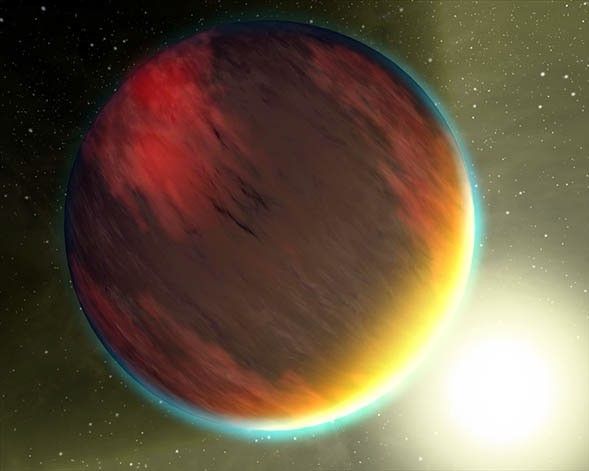
Webb telescope gets unprecedented look at dead star's surviving planet
A giant planet somehow heated back up billions of years after its star died, giving astronomers insight into the wildly unexpected afterlife of solar systems. Using NASA's James…
Within just three days of each other, Chinese and Japanese spacecraft got up close and personal with two different asteroids. The China National Space Administration sent Tianwen-2 to visit Kamo'oalewa, a 300-foot-wide rock some call a quasi-moon of Earth, on July 2. The Japan Aerospace Exploration Agency, aka JAXA, sent its Hayabusa2 spacecraft by a 1,500-foot-wide space rock dubbed Torifune on July 5. The missions, which each scored photos of their targets, show a thirst for knowledge about these dinosaur killers and how to potentially stop them, should one ever be on a collision course with our planet. Though neither of these so-called near-Earth asteroids is a threat, scientists and engineers hope to use these and other close encounters to prepare for potential dangerous ones in the future. In a post on X, the European Space Agency congratulated both space programs for their successes while promoting its own Hera mission, a robotic spacecraft on its way to visit Dimorphos, the asteroid NASA's DART mission intentionally slammed into for asteroid target practice in 2022. Asteroids are the ancient detritus leftover from the formation of the solar system about 4.6 billion years ago

Jul 8, 2026 → Jul 8, 2026
Within just three days of each other, Chinese and Japanese spacecraft got up close and personal with two different asteroids. The China National Space Administration sent Tianwen-2 to visit Kamo'oalewa, a 300-foot-wide rock some call a…
Read original at Mashable →1 updates from 1 source.
Within just three days of each other, Chinese and Japanese spacecraft got up close and personal with two different asteroids. The China National Space Administration sent Tianwen-2 to visit Kamo'oalewa, a 300-foot-wide…
Read original at Mashable →What this story stands on. Tier 0 is a primary record or the subject's own words; higher tiers must be attributed, never stated as bare fact.
Within just three days of each other, Chinese and Japanese spacecraft got up close and personal with two different asteroids. The China National Space Administration sent Tianwen-2 to visit Kamo'oalewa, a 300-foot-wide rock some call a…
View source →Tier key: T0 = Primary source · T1 = Wire · T2 = Outlet report · T3 = Commentary
A giant planet somehow heated back up billions of years after its star died, giving astronomers insight into the wildly unexpected afterlife of solar systems. Using NASA's James…
If the large, rocky planet is losing helium, then we can infer what is left behind. Most of the gas in the Universe is a mixture of hydrogen and helium. It’s thought that the…
Our gifting experts are obsessively searching for holiday gifts that are unique, thoughtful and suitable for any budget. Our expert, award-winning staff selects the products we…
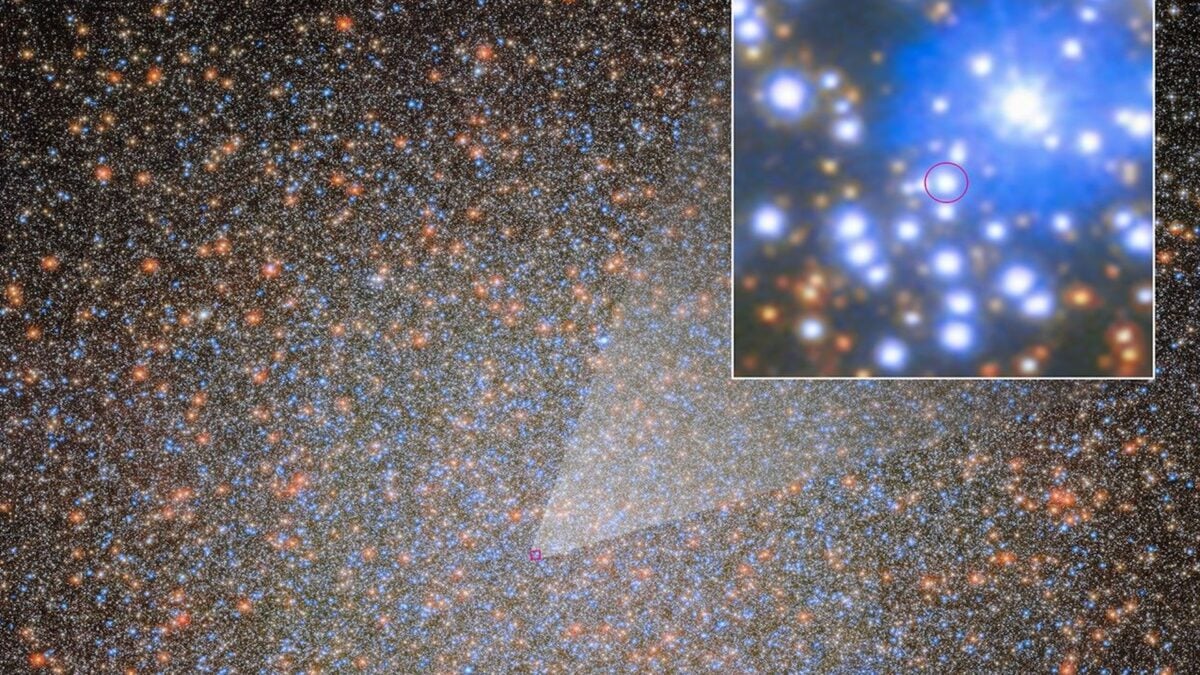
Astronomers charted a star’s path over 20 years as it circled an invisible object that was rather hefty. The mysterious object was found to be a stellar-mass black hole, one of…
NASA on Tuesday revealed the four astronauts who will join the next Artemis mission â a key, two-week flight that will aim to test out various technologies considered vital to…
It's the Full Moon tonight, and the second this month. This means it is a monthly Blue Moon, which occurs roughly every two or three years. As of Sunday, May 31, the Moon phase is…